
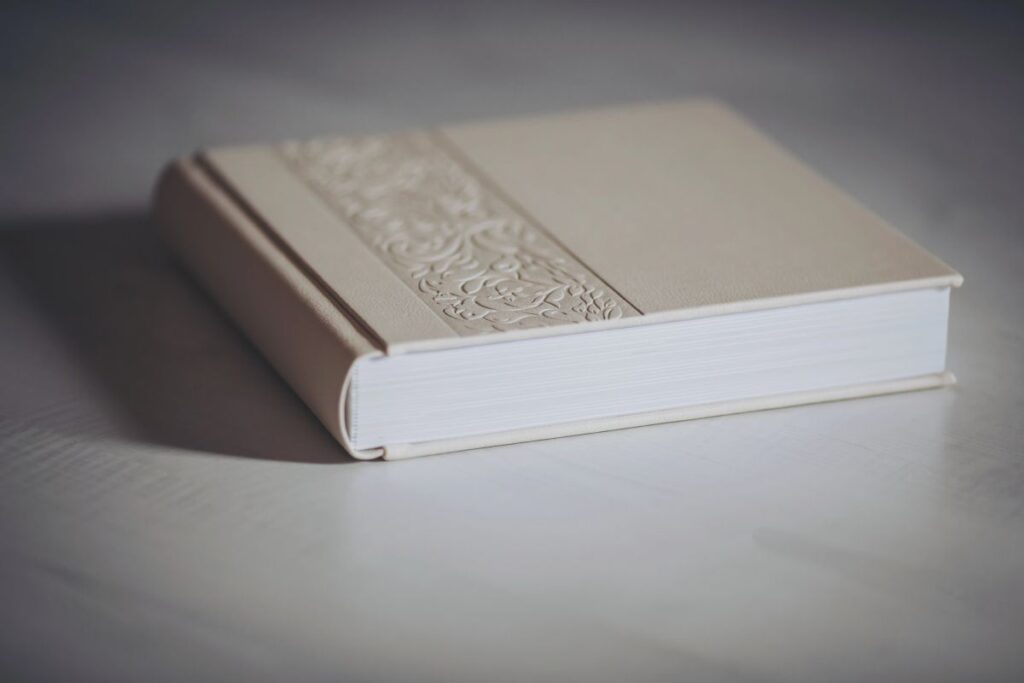
Embossing printing is one of those finishing techniques that can genuinely stop someone in their tracks. You hand them a business card or a brochure, and before they even read a word, their fingers are already tracing the raised logo or the pressed-in lettering. That tactile moment matters more than most people expect. But there’s a real question that comes up often in our shop: should you go with embossing, or would debossing serve your project better? The two are easy to confuse, and the right choice depends on a few key factors worth thinking through before you go to press.
What’s the Actual Difference?
At its most basic, embossing raises an image or text above the surface of the paper or substrate. A metal die presses from underneath, creating a three-dimensional, sculpted effect that sits proud of the sheet. Debossing is the reverse: the die presses down into the material, leaving an impression that recesses into the surface.
Both techniques use heat and pressure applied through custom dies, and both can be done with or without ink or foil. When you combine embossing with foil stamping, for example, you get what’s called a combination stamp, and the result is genuinely striking. We’ve been doing this work since 1976, so we’ve seen just about every application imaginable, from softcover book covers to high-end packaging to corporate stationery.
When Embossing Is the Right Call
Embossing tends to work beautifully when you want something to command attention. Logos, monograms, and decorative borders come alive when they rise off the page. It pairs especially well with heavier stocks, since thinner papers can sometimes struggle to hold the definition of a raised impression cleanly.
If your project calls for a premium, prestigious feel, embossing is often the instinctive choice. Wedding invitations, annual reports, executive stationery, and luxury packaging all benefit from that upward dimension. Clients we work with from around Cleveland, as well as those who send jobs to us from Akron and the broader Summit County area, often request embossed covers for presentation folders and bound proposals precisely because of that first impression factor.
One thing to keep in mind: embossing is generally more visible under raking light. If your piece will be displayed or handled in bright environments, the raised texture catches the light in a way that adds even more visual interest.
When Debossing Makes More Sense
Debossing tends to feel more understated and refined. The impression sits into the material rather than projecting outward, which gives finished pieces a clean, modern quality. Leather-grain book covers, product packaging, and minimalist brand pieces often look sharper with a debossed treatment because the design doesn’t compete with anything else on the surface.
It’s also worth noting that debossing can be more forgiving on certain lighter-weight stocks. Because the die is pressing into rather than pushing through the material, there’s somewhat less risk of the paper tearing or distorting along fine details. For intricate artwork or small text, this is a practical consideration.
We see strong demand for debossing from graphic designers and marketing firms across Ohio and Indiana, including clients in Dayton, who are putting together branded collateral that needs to feel high-quality without leaning into ornamentation. A debossed logo on a matte-laminated card, for instance, reads as confident and intentional.
Combining Techniques (and Adding Other Finishes)
One of the advantages of working with a full-service print finisher rather than a printer handling finishing as an afterthought is that you can layer techniques thoughtfully. Embossing or debossing can be combined with foil stamping, UV coating, or laminating to create pieces that really do something different. Our foil stamping press handles sheets up to 23″ by 28″, which opens up a lot of options for larger format work.
We also do UV coating up to 20″ wide on one or two sides, which pairs nicely with embossed covers when you want a glossy field surrounding a matte or uncoated raised element. That contrast in texture, gloss against dimension, is something that’s hard to replicate digitally and makes a real difference in how a finished piece is perceived.
Choosing Based on Your Substrate and Budget
Paper weight, coating, and the complexity of your artwork all factor into which technique will give you the cleanest result. Heavier, uncoated or soft-coated stocks tend to emboss and deboss most crisply. Very smooth, heavily coated stocks can sometimes limit the crispness of fine detail in either direction.
Budget matters too, and it’s fair to discuss that honestly. Custom dies are a one-time cost that gets amortized over a print run, so embossing and debossing tend to pencil out better on longer runs or for pieces you’ll reprint regularly. If you’re a printer or designer working on behalf of a client, it’s worth having that conversation early so expectations are set before the job goes to plate.
We’ve been helping printers, designers, and business owners in the Cleveland metro area, Cuyahoga County, Strongsville, Summit County, and surrounding areas throughout Ohio and Indiana make these kinds of decisions for a long time now. If you’re weighing embossing against debossing for an upcoming project and aren’t sure which direction makes the most sense, give us a call or drop us an email. We’re glad to talk it through.