Die cutting is one of those print finishing techniques that can completely change how a piece looks, feels, and performs. If you’ve ever picked up a brochure with a curved edge, a business card with a window cut through it, or a direct mail piece shaped like a product, you’ve seen die cutting at work. It’s not just a decorative touch; it’s a strategic tool that makes marketing materials more memorable, more tactile, and more likely to get a second look. Here at Classic Laminations, we’ve been helping printers, designers, and business owners put die cutting to work since 1976, and we’ve seen firsthand how much of a difference the right cut can make.
What Die Cutting Actually Does for a Print Piece
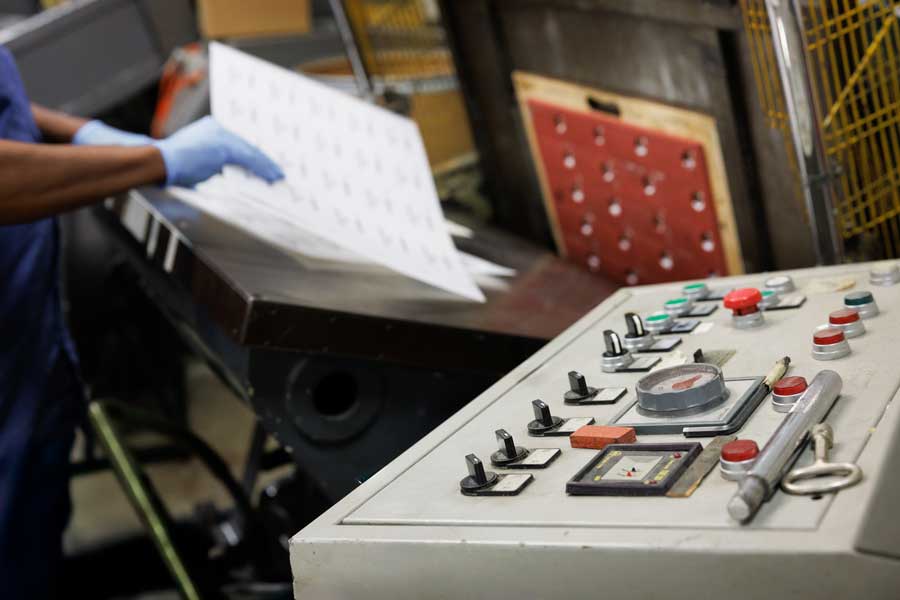
At its core, die cutting uses a custom metal die to cut paper, card stock, or other substrates into precise shapes that a standard guillotine or trimmer simply can’t achieve. The result can be anything from a clean circle or arch to a highly detailed custom silhouette. What that means for your finished piece is a shape that stands out in a stack of mail, on a retail shelf, or across a conference table.
The technique works well across a wide range of applications. Pocket folders with contoured edges look more polished than square-cornered alternatives. Hang tags with custom shapes reinforce a brand’s personality. Promotional cards cut to match a product’s outline create a connection between the printed piece and what it’s selling. Even simple rounded corners on a business card feel noticeably more refined than a standard cut.
For clients across Cleveland, Strongsville, Akron, Columbus, Dayton, and surrounding areas, we work closely with print shops and designers to make sure the die cutting complements the rest of the finishing work, whether that’s paired with foil stamping, UV coating, laminating, or embossing.
How to Set Up Your File for Die Cutting
Getting a great die cut result starts well before the job hits our press. File preparation matters a lot, and a little attention up front saves time and cost later.
First, create a separate die cut layer or spot color in your artwork file to indicate exactly where the cut should fall. Most print finishing trade shops, including ours, will ask for this clearly defined in the file so there’s no guesswork. Keep critical design elements, like text and logos, well inside the cut line. A general rule is to keep anything important at least an eighth of an inch away from the intended cut edge, since even precise cutting has a small tolerance range.
If your shape involves curves or intricate details, talk with us before finalizing the design. Some shapes that look beautiful on screen can be structurally fragile once cut, especially in lighter paper weights. We can advise on whether a stock upgrade or a slight design adjustment will get you a more durable finished piece.
Also consider how die cutting interacts with the rest of your finishing. If a piece is going to be laminated, the laminate needs to wrap around or score cleanly at the cut edge. UV coating applied before die cutting can sometimes crack along curved cuts if the coating isn’t flexible. We handle all of this in house, so when a job combines multiple finishing steps, we can sequence the work in the right order to protect the final result.
Choosing the Right Stock and Finish to Pair with Die Cutting
Die cutting works on a range of substrates, but not all stocks behave the same way. Heavier cover stocks hold their shape better after cutting and tend to feel more substantial in hand. Lighter weights can work beautifully for certain applications but may need to be handled more carefully in finishing and assembly.
The finish on the sheet matters too. Gloss laminate gives a clean, sharp edge when cut and adds rigidity. Matte laminate produces a softer look while still reinforcing the stock. Foil stamping can be combined with die cutting on the same piece to create something that’s both visually striking and structurally interesting. We’ve done this for clients ranging from independent print shops in the Cleveland metro area to larger accounts reaching across Ohio and Indiana, and the combination consistently draws attention.
If you’re working on something that calls for an unconventional shape, a window cut, an interlocking fold, or a multi-piece assembly, just describe what you’re going for. Our team has decades of experience problem-solving finishing challenges, and we’d rather work through the details with you early than have you discover an issue at the delivery stage.
Making Die Cutting Work for Your Next Project
The best die cut pieces don’t look like they’re trying to be clever. They feel natural, like the shape was always part of the design concept. That’s what good print finishing does; it makes the craft invisible and lets the message do the work.
If you have a project coming up this fall where die cutting might be the right call, or if you’re not sure whether it fits, give us a call or drop us an email and we’ll talk through what makes sense for your piece, your stock, and your budget.